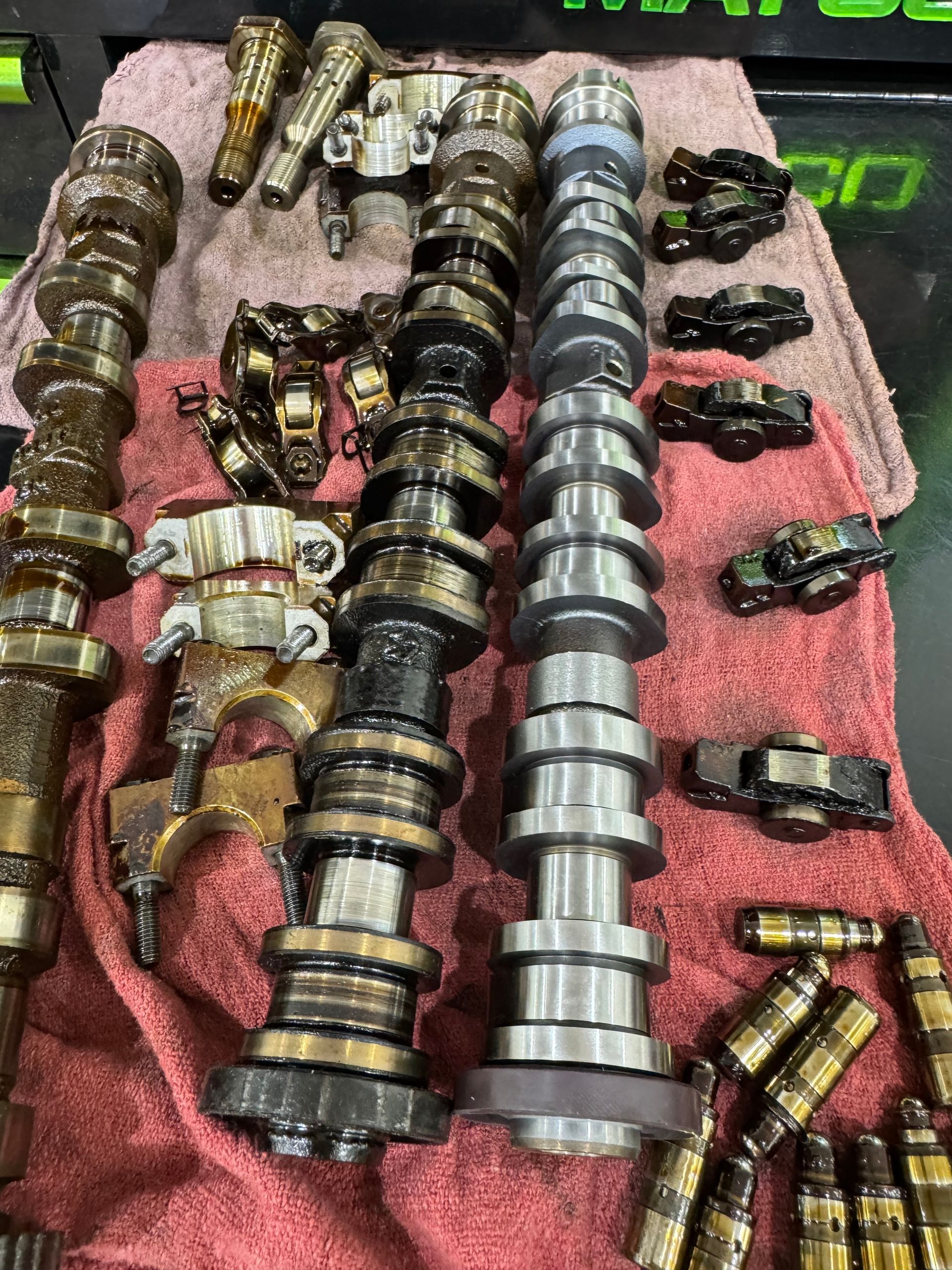
Your engine should not look like this.
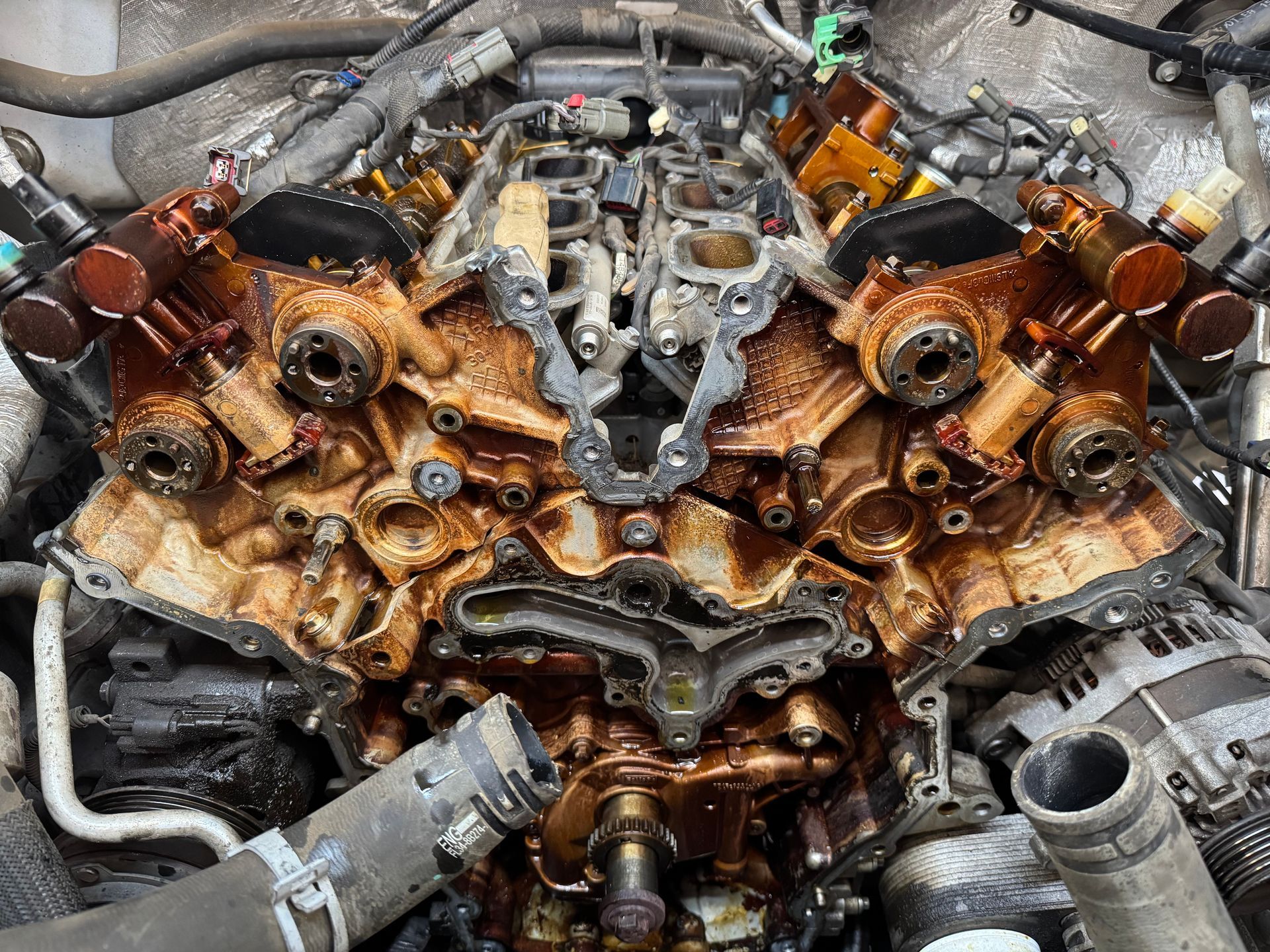
The engine above had extended oil changes. This caused damage to the camshafts, rocker arms and lifers. Extending an oil change beyond the recommended interval can damage your engine because the oil gradually loses its ability to protect the parts inside. Many manufacturers are recommending extended oil changes of over 5,000 miles. When oil changes are extended past the 3,000 to 5,000 mile mark this is what can occur.
Fresh engine oil does several jobs at once: it lubricates moving parts, helps control heat, carries contaminants to the oil filter, and leaves a protective film between metal surfaces. As the oil ages, those protective qualities decline.
When oil is left in the engine too long, the oil breaks down. Heat and normal engine operation weaken the oil and its additives. It may not maintain the protective film that keeps metal parts separated. It causes contaminants build up. Soot, combustion byproducts, moisture, fuel, and tiny metal particles can collect in the oil. Eventually, the oil and filter have a harder time keeping those contaminants under control. Sludge and deposits can form. Old oil can contribute to buildup inside the engine. Deposits may restrict small oil passages and reduce the amount of lubrication reaching critical components. Friction and heat increase. When the oil cannot lubricate properly, metal surfaces experience more friction. That extra friction creates heat and accelerates wear. Oil-controlled components can be affected. Many modern engines rely on clean oil and proper oil pressure to operate variable valve timing systems, timing chain tensioners, lifters, camshafts, turbochargers, and other components. This will also cause oil consumption to increase. Deposits and wear can affect piston rings and cylinder walls, which may allow the engine to burn more oil. Major engine damage can result. In severe cases, poor lubrication can damage bearings, camshafts, timing components, cylinder walls, or other internal engine parts.
A good example is camshaft wear. The camshaft and valve train operate under significant load and depend on a constant supply of clean oil. When lubrication is reduced, the surfaces can begin wearing against each other. Once that damage occurs, an oil change cannot repair the worn components—the engine may require substantial mechanical repairs.
That is why oil changes are considered preventive maintenance. You are not simply replacing dirty oil. You are renewing one of the engine's main forms of protection.
The correct oil-change interval depends on the vehicle, engine, oil specification and driving condition. Towing, frequent short trips, excessive idling, dusty conditions, and stop and go traffic use can also affect how often the oil should be changed.
Give us a call and let us take care of you. 541-791-2886
Happy Adventures,
Heather
Our specials can be found here
Got Questions? We have a FAQ page for you.
Would you like to join our merry band of misfits?
Want to know more…
https://www.facebook.com/JHAutomotiveInc