You press the brake pedal and suddenly your vehicle wants to move left or right.

That is not something you should have to fight against. A vehicle that pulls while braking may have a problem with the braking system, tires, suspension, steering, or alignment. Because braking is a major safety system, it is worth having the cause checked.
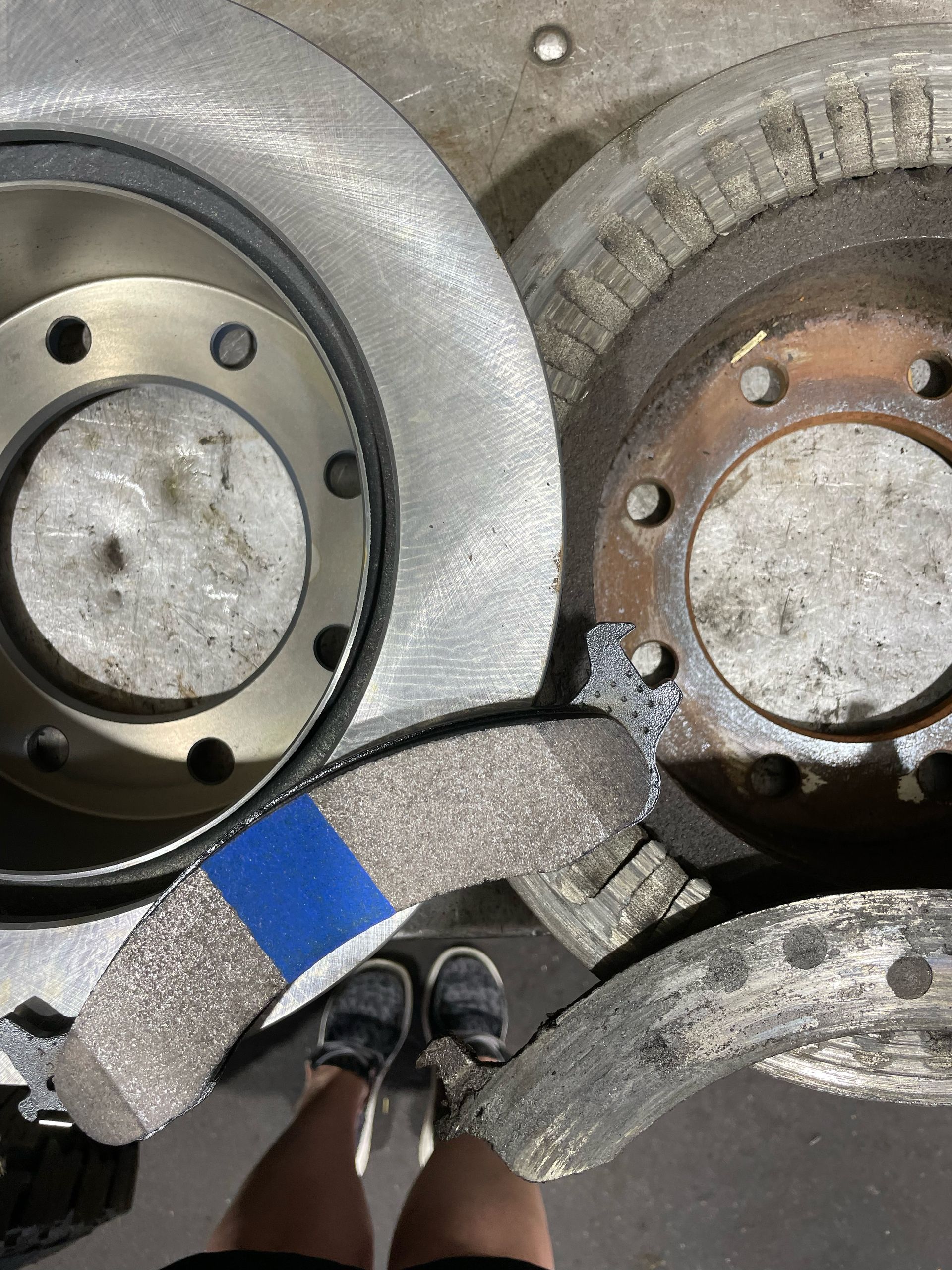
One possible cause is a brake caliper that is not working correctly. Calipers squeeze the brake pads against the rotors when you press the brake pedal. If one caliper applies differently than the other, the vehicle may pull toward one side during braking.
A sticking caliper can also cause:
- Uneven brake wear
- Excessive heat
- Burning smells
- Reduced fuel economy
- A wheel that feels unusually hot
If one wheel has significantly more or less braking force than another, the vehicle may pull. Uneven brake wear can sometimes be caused by a caliper, hardware, or other brake-system issue. Replacing brake pads without correcting the reason they wore unevenly may not solve the actual problem.
Brake hoses carry brake fluid to the calipers. Internal hose damage may affect how brake pressure is applied or released at a wheel. The hose can sometimes look normal from the outside while having a problem internally. This is one reason a proper brake inspection looks beyond the pads and rotors.
Not every braking pull is caused by the brakes. Tire problems may include:
- Uneven tire pressure
- Uneven tread wear
- Internal tire damage
- Different tire types or sizes
- Alignment-related wear
If the vehicle pulls while driving normally as well as during braking, tires or alignment may be part of the problem.
Worn steering or suspension components may allow the vehicle to shift or move differently when weight transfers forward during braking. Possible areas to inspect include:
- Ball joints
- Tie rods
- Control-arm bushings
- Wheel bearings
- Struts or shocks
- Other suspension components
The symptom may feel like a brake problem even though the cause is somewhere else.
The slope of the road, grooves in the pavement, or uneven surfaces can sometimes make a vehicle feel like it is pulling slightly.
But if the vehicle consistently pulls in the same direction when you brake, especially on different roads, it should be inspected.
Tell your technician if you also notice:
- Steering-wheel vibration
- Brake-pedal pulsation
- Grinding or squealing
- A soft brake pedal
- A burning smell
- Warning lights
- Uneven tire wear
Those details can help narrow down the cause.
It is tempting to assume that pulling means you need brakes or an alignment. Sometimes that is the answer.
Sometimes it is not. A good inspection looks at the complete system and determines why the vehicle is behaving differently.
Give us a call and let us take care of you. 541-791-2886
Happy Adventures,
Heather
Our specials can be found here
Got Questions? We have a FAQ page for you.
Would you like to join our merry band of misfits?
Want to know more…
https://www.facebook.com/JHAutomotiveInc
https://www.pinterest.com/jhautoinc
October 30