What It Means and Why You Need to Act Fast
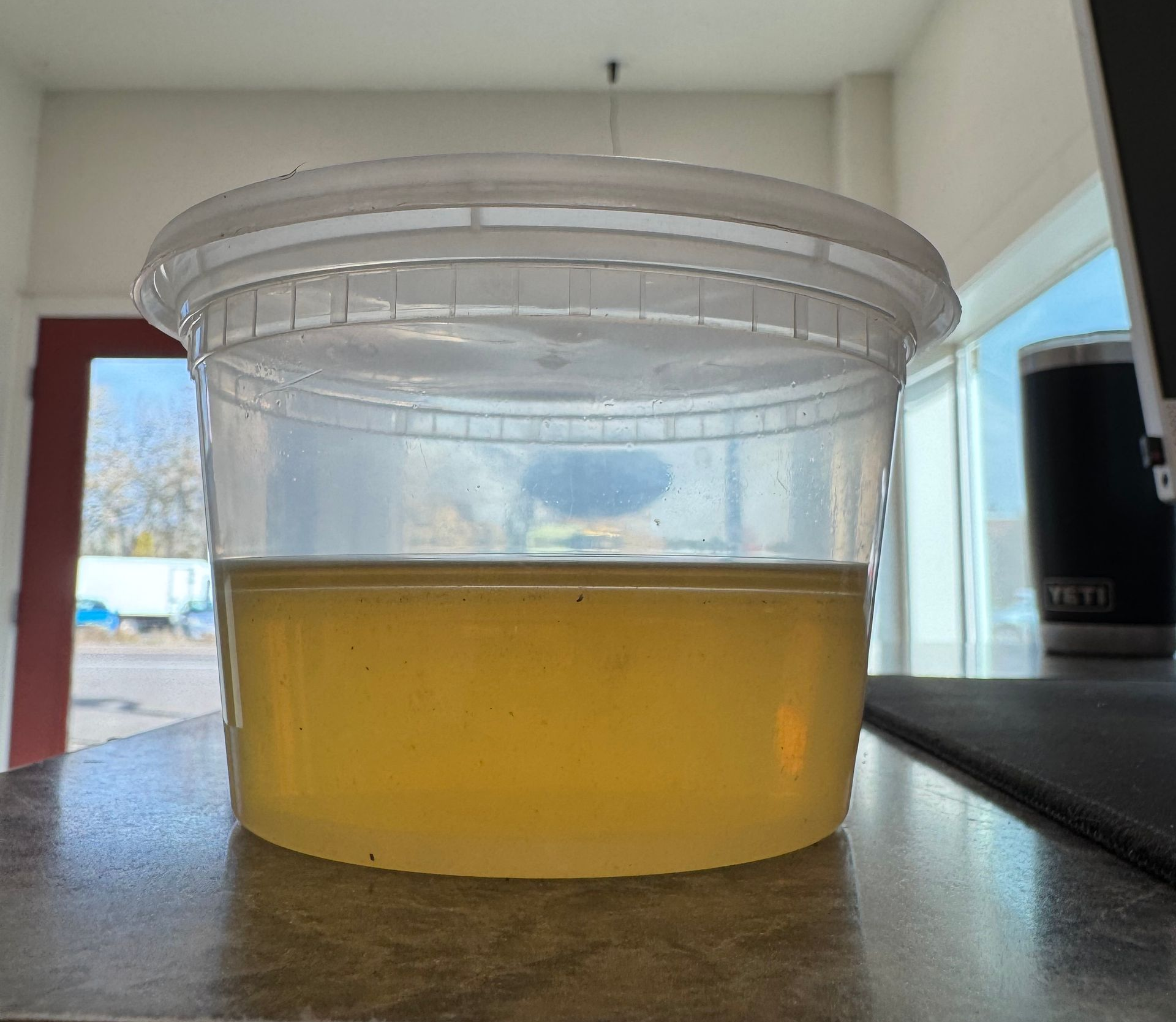
The fuel sample above is from a pickup that got bad diesel from the gas station. The little white light above that is diesel, below that is all water.
If you drive a vehicle with a diesel engine seeing the "Water in Fuel" (WIF) warning light pop up on your dashboard is a signal you should never ignore. Unlike a low washer fluid reminder, this light warns you about a direct threat to the heart of your engine.
In modern diesel engines, fuel is more than just what makes the truck go—it is what keeps your high pressure fuel system running properly. When water enters that system, damage can happen fast.
First let's talk about what the water in fuel light is and does. Diesel fuel naturally attracts and holds more moisture than gasoline. Because diesel systems are so sensitive to water, every diesel vehicle is equipped with a fuel-water separator—typically built right into the primary fuel filter housing. Because water is heavier than diesel fuel, it sinks to the bottom of the separator bowl. Inside that bowl sits a small electronic sensor. Once enough water collects at the bottom to reach the sensor probes, it completes an electrical circuit and triggers the Water in Fuel light on your dash.
Water can get into your tank a number of ways.
Condensation inside the tank is common due to our chilly nights and milder afternoon. It works a bit like a greenhouse. Moisture collects on the walls of the tank and drips down into the fuel. This is typically a small amount over a long period of time.
Next we have contaminated fuel - underground storage tanks at fuel stations can accumulate water from rain runoff or condensation, especially at stations with lower fuel turnover.
Lastly because of a damaged fuel cap. If the o-ring is damaged on your fuel cap it can allow rain and road spray to get into your tank.
This is one light that should not be taken lightly. Modern common-rail diesel fuel systems operate at astronomical pressures—often exceeding 25,000 to 30,000 PSI. At those pressures, the tolerances inside your fuel pump and injectors are narrower than a human hair, and they rely entirely on diesel fuel for lubrication.
Water provides zero lubrication. If water gets past the separator and reaches your engine, it can cause immediate, severe damage to your fuel system including your fuel injectors and injection pump. This causes failures that lead to your other fuel components like your fuel rail and fuel lines to be contaminated as well.
When the light comes on you need to pull over and turn off your engine. Catching water in the separator early is a quick, straightforward fix. Waiting until water reaches the high-pressure fuel pump can turn a minor service visit into a major repair bill.
Give us a call and let us take care of you.
Happy Adventures,
Heather
Our specials can be found here
Got Questions? We have a FAQ page for you.
Would you like to join our merry band of misfits?
Want to know more…
https://www.facebook.com/JHAutomotiveInc
https://www.pinterest.com/jhautoinc